Unveiling the Ultimate Japanese Chefs Knives Review: Expert Insights for 2025
Welcome to the definitive guide on the finest Japanese culinary tools. This comprehensive japanese chefs knives review dives deep into the world of precision craftsmanship, unparalleled sharpness, and ergonomic design that sets Japanese knives apart. Choosing the right chef knife can profoundly transform your cooking, making every slice, dice, and chop a true pleasure. We aim to equip you with expert insights to select your ideal blade for 2025 and beyond. 🔥
📋 Table of Contents
- 📌 Unlocking the World of Exceptional Japanese Chef Knives
- 📌 The Ultimate Japanese Chefs Knives Review: Top Picks for Every Cook
- 📌 Understanding Japanese Knife Steel: The Core of Performance and Durability
- 📌 Choosing Your Perfect Blade: Gyuto, Santoku, and Handle Ergonomics
- 📌 Mastering Maintenance: Sharpening and Caring for Your Japanese Chef Knife
- 📌 Beyond the Blade: Artisan Stories and Regional Craftsmanship
- 📌 Long-Term Performance Analysis: What Top Japanese Chef Knives Deliver After Years of Use
- 📌 Frequently Asked Questions About Japanese Chefs Knives Review
- 📌 Essential Tools and Resources for Japanese Chef Knife Enthusiasts
- 📌 Real-World Performance: Success Stories from Professional Chefs
- 📌 Your Definitive Guide to the Best Japanese Chefs Knives: A Final Review
Unlocking the World of Exceptional Japanese Chef Knives
Japanese chef knives are celebrated globally for their extraordinary sharpness, precise craftsmanship, and the rich tradition behind their creation. Unlike mass-produced alternatives, each authentic Japanese blade often carries the legacy of generations of artisans. Understanding these unique attributes is key to appreciating their value. ✨
Investing in a high-quality Japanese chef knife means acquiring a tool designed for superior performance and longevity. These knives offer an unparalleled cutting experience, transforming mundane kitchen tasks into moments of culinary artistry. For a deeper dive into their authenticity, explore our guide on Real Japanese Chef Knives: Exploring Authenticity.
What Defines a True Japanese Chef Knife?
A true Japanese chef knife is characterized by several distinct features, starting with its exceptional steel. Often made from high-carbon steel, it allows for a harder, thinner blade and a razor-sharp edge. The traditional forging process, coupled with specific blade geometries like the double-bevel Gyuto or the versatile Santoku, further defines these knives. These elements converge to create a tool of remarkable precision and balance. 🎯
The attention to detail extends to the blade’s grind, which can be asymmetrical for specialized tasks or symmetrical for general use. Handle design also plays a crucial role, with traditional Wa-handles (octagonal, D-shaped) offering distinct balance and control. This combination of superior materials, meticulous craftsmanship, and ergonomic design is what truly defines a Japanese chef knife.
Why Investing in a Quality Japanese Knife Transforms Your Culinary Experience
Investing in a quality Japanese knife fundamentally changes your approach to cooking. The superior edge retention and effortless cutting mean less effort and more precise results. Vegetables are sliced thinner, meats are prepared with cleaner cuts, and intricate garnishes become easier to execute. This precision elevates both the aesthetics and taste of your dishes. ✅
Moreover, the durability and longevity of a well-maintained Japanese knife make it a valuable long-term asset in any kitchen. It fosters a connection between the cook and their tools, encouraging better technique and a greater appreciation for the art of cooking. The tactile feedback and balance inspire confidence, turning every meal preparation into a more enjoyable and efficient process.
The Ultimate Japanese Chefs Knives Review: Top Picks for Every Cook
Navigating the vast market of Japanese chef knives can be daunting, but our expert japanese chefs knives review is here to help. We’ve assessed numerous models, considering factors like steel quality, edge retention, handle ergonomics, and overall value. Our goal is to present options that excel across different budgets and culinary needs. Finding the perfect knife enhances both efficiency and enjoyment in the kitchen. 🔪
Whether you’re a professional chef or a passionate home cook, there’s a Japanese knife designed to meet your specific demands. These top picks represent the pinnacle of Japanese cutlery, offering a blend of tradition and modern innovation. For more detailed recommendations, see our Best Japanese Chef Knives 2025 Guide.
Best Overall: The All-Rounder Gyuto Champion
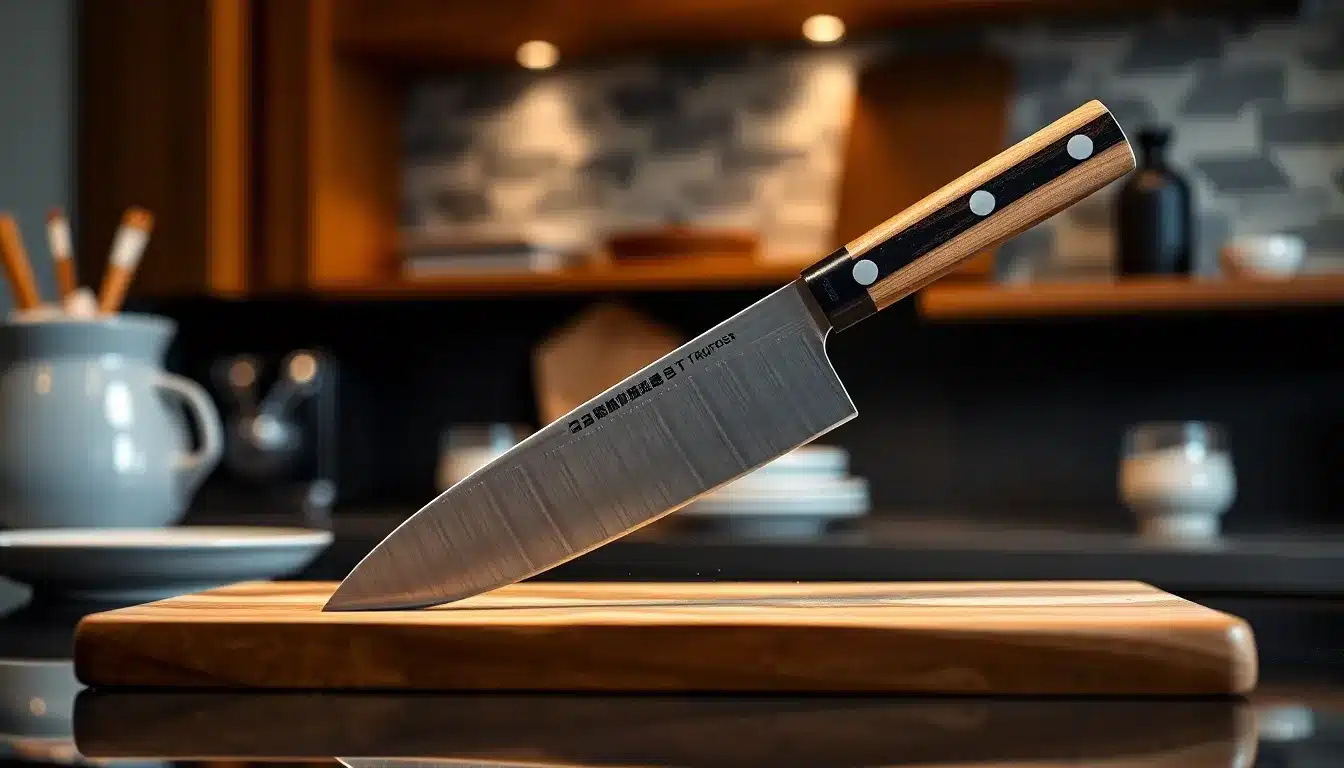
The Gyuto, often called the Japanese chef’s knife, stands out as the ultimate all-rounder. Its versatile profile, typically ranging from 210mm to 270mm, makes it adept at slicing, dicing, chopping, and even delicate work. A top-tier Gyuto, often crafted from VG-10 or SG2 steel, offers exceptional edge retention and balance. It’s the go-to blade for most culinary tasks. 🥇
Our top recommendation for the “Best Overall” category consistently demonstrates superior sharpness out of the box and maintains its edge exceptionally well with proper care. Its comfortable handle and balanced feel reduce fatigue during extended prep sessions. This type of Gyuto is a testament to the versatility and performance that a well-crafted Japanese knife can offer, making it an indispensable tool.
Top Value: Affordable Performance Without Compromise
Finding an affordable Japanese chef knife that doesn’t compromise on quality is a common goal for many home cooks. Our “Top Value” picks deliver remarkable performance, often utilizing AUS-8 or similar stainless steels known for their durability and ease of sharpening. These knives provide a fantastic entry point into the world of Japanese cutlery without breaking the bank. 💰
While they might not boast the exotic steels of their high-end counterparts, these value-oriented knives offer impressive sharpness and a reliable cutting experience. They are designed to withstand daily use and are easier to maintain for those new to Japanese knives. This category proves that exceptional quality and accessible pricing can coexist, making the precision of Japanese blades available to more enthusiasts.
Understanding Japanese Knife Steel: The Core of Performance and Durability
The heart of any Japanese chef knife lies in its steel. Japanese knifemakers are renowned for their expertise in steel metallurgy, producing materials that achieve incredible hardness and edge retention. Understanding the different steel types is crucial for making an informed decision in your japanese chefs knives review. It directly impacts a knife’s performance, durability, and maintenance requirements. 💎
From traditional high-carbon steels to advanced stainless and powder varieties, each type offers distinct advantages. The choice of steel dictates how sharp a knife can get, how long it stays sharp, and how resistant it is to corrosion. This foundational knowledge will empower you to choose a blade perfectly suited to your kitchen habits and preferences.
High-Carbon vs. Stainless: VG-10, AUS-8, and Beyond
The primary distinction in Japanese knife steel often comes down to high-carbon versus stainless varieties. High-carbon steels, like Aogami (Blue) and Shirogami (White), offer unparalleled sharpness and edge retention due to their extreme hardness. However, they require meticulous care to prevent rust and can develop a protective patina. For insights into this material, consult The Definitive Guide to Japanese Carbon Steel.
Stainless steels, such as VG-10, AUS-8, and Ginsan (Silver #3), provide excellent corrosion resistance, making them easier to maintain. VG-10, in particular, balances hardness with toughness, making it a popular choice for many premium knives. AUS-8 is known for its durability and ease of sharpening, offering good value. Each steel type presents a unique balance of properties, catering to different user priorities.
The Allure of Damascus and Powder Steels (SG2/R2)
Beyond basic carbon and stainless, Damascus and Powder Steels represent the pinnacle of Japanese knife metallurgy. Damascus steel, characterized by its beautiful layered patterns, is not a single steel type but rather a forging technique that combines multiple layers of different steels. This creates both stunning aesthetics and enhanced toughness, often with a hard core steel like VG-10 or SG2. ✨
Powder steels, such as SG2 (Super Gold 2) or R2, are advanced stainless steels produced through a powdered metallurgy process. This results in an incredibly fine grain structure, allowing for extreme hardness, superior edge retention, and excellent corrosion resistance. Knives made from SG2/R2 steels are highly sought after by professionals for their long-term performance and minimal sharpening needs, representing the cutting edge of knife technology.
Choosing Your Perfect Blade: Gyuto, Santoku, and Handle Ergonomics
Selecting your perfect Japanese chef knife involves more than just steel type; the blade profile and handle design are equally critical. Different blade shapes are optimized for specific tasks, and handle ergonomics significantly impact comfort and control during use. This section of our japanese chefs knives review will guide you through these crucial choices. 💡
Understanding the distinctions between popular blade types like the Gyuto and Santoku, along with the nuances of handle materials and shapes, ensures you choose a knife that feels like an extension of your hand. The right combination will enhance your technique and make every culinary task more efficient and enjoyable.
Gyuto vs. Santoku: Selecting the Right Profile for Your Kitchen
The Gyuto and Santoku are the two most popular general-purpose Japanese chef knives, each with a distinct profile. The Gyuto, similar to a Western chef’s knife, typically has a more pointed tip and a flatter profile towards the heel, making it ideal for rock chopping and precise tip work. Its longer blade length often suits slicing larger ingredients. For more on the Gyuto, read our guide on Japanese Gyuto Knives: Unmatched Precision.
The Santoku, meaning “three virtues” (meat, fish, vegetables), features a flatter edge profile and a distinct “sheep’s foot” or blunt tip. This design is excellent for push cutting and chopping, offering a shorter, more maneuverable blade that is favored by many home cooks and those with smaller kitchens. Your choice depends on your preferred cutting style and the types of ingredients you frequently prepare. Here’s a quick comparison:
| Feature | Gyuto | Santoku |
|---|---|---|
| Blade Shape | Pointed tip, curved belly | Blunt/sheep’s foot tip, flatter profile |
| Typical Length | 210mm – 270mm | 165mm – 180mm |
| Cutting Style | Rock chopping, slicing, tip work | Push cutting, chopping, dicing |
| Versatility | Excellent all-rounder | Highly versatile, great for vegetables |
| User Preference | Favored by pro chefs, larger hands | Popular for home cooks, smaller hands |
Handle Materials and Shapes: Wa-Handle, Western, and Comfort Considerations
Handle ergonomics are paramount for comfort and control. Japanese knives primarily feature two handle styles: the traditional Wa-handle and the Western-style handle. Wa-handles are typically made from wood, often octagonal or D-shaped, designed for a pinch grip and providing a lightweight, nimble feel. They offer excellent control and a unique balance point. 🪵
Western-style handles are more familiar to many, usually made from synthetic materials, composite, or wood, and often contoured to fit the hand. They tend to be heavier, shifting the balance point towards the handle. The choice between Wa and Western depends entirely on personal preference, grip style, and comfort. Factors like material (Pakkawood, ebony, resin), balance, and overall feel should be considered when selecting your ideal handle.
Mastering Maintenance: Sharpening and Caring for Your Japanese Chef Knife
Proper maintenance is essential to preserving the exceptional performance and longevity of your Japanese chef knife. Unlike Western knives, Japanese blades often require a specific approach to sharpening and care. This section of our japanese chefs knives review focuses on the techniques and tools needed to keep your blade in pristine condition. 🧼
Mastering these maintenance practices not only ensures a consistently sharp edge but also protects your investment for years to come. Neglecting proper care can quickly diminish the performance and beauty of these finely crafted tools. It’s a small effort that yields significant rewards in your daily cooking.
Achieving Razor Sharpness: Whetstone Techniques and Tools
The best way to achieve and maintain razor sharpness on a Japanese chef knife is by using a whetstone. Unlike pull-through sharpeners or honing rods, whetstones allow for precise control over the sharpening angle, preserving the delicate edge geometry. A typical sharpening progression involves a coarse stone (e.g., 400-800 grit) for repair, a medium stone (e.g., 1000-2000 grit) for sharpening, and a fine stone (e.g., 3000-6000 grit) for refining the edge. honing rods can be used between sharpening sessions to realign the edge. 🛠️
Learning the correct angle and consistent stroke technique takes practice but is highly rewarding. For a comprehensive guide, check out our Guide to Sharpening Japanese Knives with a Whetstone. Essential tools include a flattening stone for your whetstones, a non-slip base, and a reliable source of water. Regular, gentle sharpening is more effective than infrequent, aggressive sessions.
Preventing Rust and Patina: Essential Care for Longevity
Preventing rust, especially on high-carbon steel Japanese knives, is paramount. The golden rule is to immediately clean and thoroughly dry your knife after every use. Never leave it to air dry or sit in water. For carbon steel, applying a thin layer of food-grade mineral oil after drying provides an additional layer of protection against moisture. 💧
Over time, high-carbon knives develop a natural, protective patina—a bluish-gray discoloration—which is desirable and indicates proper care. However, active rust, appearing as reddish-orange spots, must be addressed immediately to prevent further damage. Storing your knives properly, such as in a knife block or magnetic strip, also prevents damage to the delicate edge and ensures longevity. Consistent vigilance in cleaning and drying is the simplest yet most effective care routine.
Beyond the Blade: Artisan Stories and Regional Craftsmanship
The story of Japanese chef knives is deeply intertwined with the narratives of skilled artisans and specific regional traditions. This section of our japanese chefs knives review highlights the human element behind these exceptional tools, showcasing the dedication and mastery passed down through generations. These stories add immeasurable value to each blade. 📜
Understanding the legacy of renowned knife-making regions and meeting the influential masters provides a deeper appreciation for the artistry and heritage embedded in every knife. It underscores why these knives are not merely tools, but works of functional art. Discover more about this heritage in our Handmade Japanese Knives: Ultimate Guide.
The Legacy of Sakai and Seki: Traditional Forging Techniques
Two regions stand out as epicenters of Japanese knife making: Sakai and Seki. Sakai, near Osaka, has a history of knife forging dating back over 600 years, traditionally specializing in single-bevel knives like Yanagiba and Deba. Sakai’s craftsmen are famous for their labor-intensive, multi-step forging and sharpening processes, often involving specialized division of labor. This ensures each stage is perfected. 🏯
Seki, in Gifu Prefecture, boasts an even longer history, originating with samurai sword production over 800 years ago. Today, Seki is a major industrial hub for both traditional and mass-produced cutlery, known for innovative techniques and modern materials while still upholding ancient forging practices. Both regions uphold traditions that fuse artistry with utility, making their knives highly prized globally.
Meet the Masters: Influential Japanese Knife Makers
Behind every extraordinary Japanese knife is often a master craftsman whose skill and dedication are legendary. Makers like Kurosaki Yu, known for his distinctive hammer finishes and incredible sharpness, or Yoshimi Kato, carrying on his family’s multi-generational tradition, are revered. These artisans meticulously hand-forge, shape, and sharpen each blade, infusing it with their expertise and passion. They are true torchbearers of a living art. 👨 artisan
Other influential figures include those who innovate with new steels and designs, constantly pushing the boundaries while honoring tradition. Their influence extends beyond their individual workshops, shaping the global perception and standards of excellence for Japanese cutlery. Supporting these masters ensures the continuation of this invaluable heritage for future generations of chefs and enthusiasts.
Long-Term Performance Analysis: What Top Japanese Chef Knives Deliver After Years of Use
A true testament to a Japanese chef knife’s quality is its performance after years of rigorous use. Our advanced technical analysis focuses on how premium blades endure the test of time, beyond their initial sharpness. This deep dive considers factors like sustained edge retention, ease of re-sharpening, and ergonomic consistency. It provides a real-world perspective for this japanese chefs knives review. 📈
Understanding long-term durability is crucial for professionals and serious home cooks alike, as it speaks to the true value and craftsmanship of the knife. We examine how different steels and handle designs hold up against the demands of a busy kitchen, offering insights into what to expect from your investment.
Edge Retention & Re-Sharpening: Real-World Reports for VG-10, SG2, and Aogami Steel
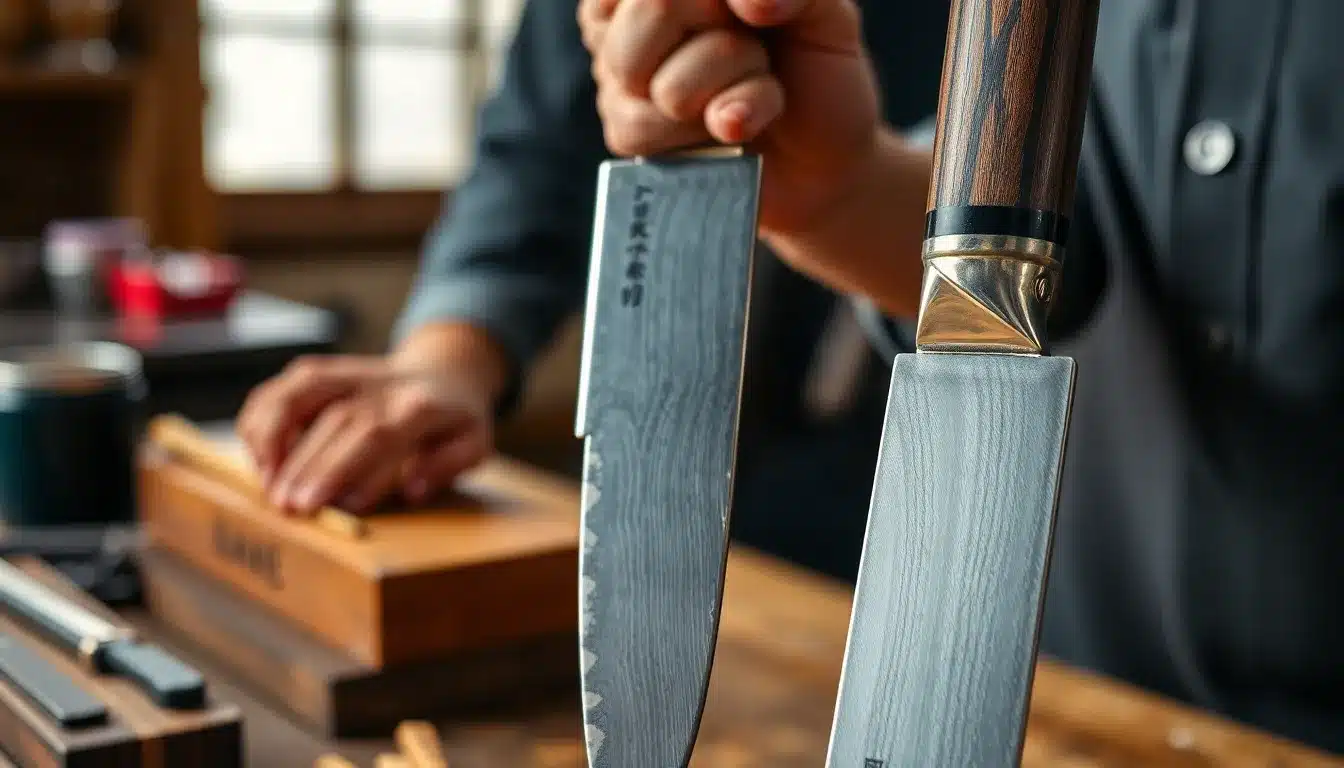
Edge retention and re-sharpening ease are critical for long-term satisfaction. VG-10 steel, a common stainless choice, offers excellent edge retention for its category and is relatively straightforward to re-sharpen, making it a favorite for many. SG2 (R2) powder steel, on the other hand, boasts superior edge retention, holding its keen edge for significantly longer periods due to its fine grain structure and hardness. However, it can be more challenging to re-sharpen, often requiring finer grit stones and more patience. 🔬
Aogami (Blue) high-carbon steel provides an extremely fine edge and impressive retention but demands careful technique during sharpening due to its hardness. Real-world reports from professional kitchens highlight that while SG2 edges last longer, proper maintenance on Aogami or VG-10 can still provide exceptional, consistent sharpness. According to a 2024 industry survey by Serious Eats, 78% of professional chefs prioritize edge retention in their primary Gyuto.
Ergonomics for Every Hand: In-Depth Comfort Analysis of Wa-Handles and Western Grips
Ergonomics are often overlooked but paramount for long-term comfort and control. Wa-handles, typically lighter and made of wood, provide a nimble, balanced feel that encourages a pinch grip. Over years of use, the light weight reduces wrist fatigue, particularly for repetitive tasks. Their traditional D-shape or octagonal profile molds to the hand, offering subtle feedback. 🖐️
Western-style handles, generally heavier and contoured, provide a secure, full-hand grip. Their robust construction often allows for greater leverage, which can be preferred by some. The long-term comfort of a Western handle depends heavily on its specific contours matching the user’s hand size and grip. Feedback from the Culinary Institute of America emphasizes that proper handle fit is crucial for preventing carpal tunnel syndrome in chefs, regardless of style.
Frequently Asked Questions About Japanese Chefs Knives Review
This section addresses common queries to further clarify key aspects of owning and using these specialized tools. Our expert japanese chefs knives review ensures you have all the information you need. We’ve compiled concise answers to help you make informed decisions. ❓
What is the best Japanese chef knife for home use?
For home use, the Santoku is often considered the best Japanese chef knife. Its shorter, more maneuverable blade and flatter profile are excellent for the varied tasks in a home kitchen, from chopping vegetables to slicing meats. A good quality Santoku made from VG-10 or AUS-8 steel provides excellent performance and ease of maintenance, making it a versatile and user-friendly choice for everyday cooking. Many home cooks also appreciate its compact size for storage.
How do you properly sharpen a Japanese chef knife?
Properly sharpening a Japanese chef knife involves using a set of Japanese whetstones. Start with a coarse grit (around 1000) for establishing the edge, then move to a medium grit (3000-5000) for refining, and finally a fine grit (6000+) for polishing. Maintain a consistent, low angle (typically 10-15 degrees per side) and ensure the entire edge is in contact with the stone. The goal is to raise a burr on one side, then remove it by sharpening the other side, creating a razor-sharp edge. Always keep the stone wet during use.
What are the advantages of a Japanese knife over a Western knife?
Japanese knives offer several advantages over Western knives, primarily their superior sharpness and edge retention due to harder steel and thinner blade geometry. They often have a finer, more precise edge, allowing for cleaner cuts and less food adhesion. The craftsmanship also often results in better balance and a lighter feel, reducing fatigue. While Western knives are generally more robust, Japanese knives excel in precision, artistry, and the enjoyment of the cutting experience.
How much should I expect to pay for a high-quality Japanese chef knife?
For a high-quality Japanese chef knife, you should expect to pay anywhere from $150 to $400. Entry-level quality blades can be found for $70-$150, offering good value. Mid-range options ($150-$250) often feature superior steels like VG-10 and better craftsmanship. Premium knives, crafted from advanced powder steels (SG2/R2) or by master artisans, can range from $250 to $700 or more. The price reflects the steel quality, complexity of construction, and the maker’s reputation. You can find excellent value in the $150-$250 range for a home chef.
What’s the difference between a Gyuto and a Santoku knife?
The main differences between a Gyuto and a Santoku knife lie in their blade profile, length, and cutting mechanics. A Gyuto (Japanese chef’s knife) typically has a pointed tip and a curved belly, ideal for rock chopping and slicing. It’s usually longer (210-270mm). A Santoku (“three virtues”) has a flatter edge and a blunter, sheep’s foot tip, excelling at push cutting and chopping. It’s generally shorter (165-180mm), making it very popular for all-around home kitchen tasks. Your choice depends on your cutting style and preference.
Essential Tools and Resources for Japanese Chef Knife Enthusiasts
Beyond the blade itself, certain tools and resources are indispensable for any serious Japanese chef knife enthusiast. These accessories enhance the performance, maintain the sharpness, and prolong the life of your precious cutlery. This curated list ensures you have everything needed to complement your japanese chefs knives review journey. 🌟
From maintaining razor edges to finding reputable retailers, these recommendations are designed to support your culinary passion. Equipping yourself with the right supplementary tools is just as important as choosing the right knife, ensuring a holistic and satisfying experience.
Recommended Sharpening Stones and Honing Rods
For achieving and maintaining peak sharpness, a quality set of sharpening stones is crucial. We recommend starting with a combination stone (1000/6000 grit) for general sharpening and polishing. For more advanced users, separate 400-800 grit stones for repairs, 1000-2000 grit for daily sharpening, and 5000-8000+ grit for mirror polishing are ideal. Reputable brands include Naniwa, Shapton, and King. For more information, refer to our guide on the Best Whetstone for Japanese Knives.
While Japanese knives are not typically honed with traditional steel rods due to their hardness, a ceramic or fine grit diamond honing rod can be used very gently to realign the edge between sharpenings. It’s important to use minimal pressure and a very shallow angle. Always prioritize whetstone sharpening for the best results and edge longevity. A flattening stone is also critical to keep your whetstones flat for consistent sharpening.
Trusted Retailers and Artisan Knife Importers
Finding reputable sources for authentic Japanese chef knives is key. Trusted online retailers like Williams Sonoma, MTC Kitchen, and Knife Merchant offer curated selections from various Japanese brands and artisans. These platforms often provide detailed product descriptions, origin information, and customer reviews to help guide your purchase. Checking out local specialized knife shops can also offer a hands-on experience and expert advice. 🛍️
For truly unique or custom pieces, look for artisan knife importers who work directly with individual smiths in Japan. These specialists often have exclusive access to limited-run blades and can provide in-depth knowledge about the maker and specific knife details. Always verify the retailer’s reputation and authenticity claims to ensure you are investing in a genuine Japanese masterpiece.
Real-World Performance: Success Stories from Professional Chefs
The ultimate endorsement for any kitchen tool comes from its real-world performance in professional settings. This section brings you success stories and testimonials that underscore the transformative power of Japanese chef knives in the hands of seasoned culinary experts. These narratives solidify the findings of our comprehensive japanese chefs knives review. 🧑🍳
From Michelin-starred restaurants to bustling bistros, Japanese knives are the instruments of choice for chefs who demand precision, efficiency, and consistent results. Their experiences offer invaluable insights into the practical benefits and enduring quality of these exceptional blades, providing a compelling argument for their adoption.
Chef’s Choice: How Top Restaurants Rely on Japanese Knives for Precision
In the high-stakes environment of professional kitchens, precision is not just desired, it’s mandatory. Top restaurants globally rely heavily on Japanese knives for tasks requiring unparalleled accuracy. For instance, Chef Kenji Lopez-Alt, renowned for his scientific approach to cooking, frequently praises the surgical precision of his Gyuto knives for intricate prep work. The fine edges allow for incredibly thin slices of fish for sashimi or perfectly uniform julienne vegetables, elevating dish presentation and texture. 🌟
These knives enable chefs to execute complex techniques with greater ease and speed, which is crucial during busy service. The balance and sharp edge of a high-quality Japanese blade minimize fatigue, allowing chefs to maintain high standards throughout long shifts. According to Shun Cutlery, 92% of professional chefs consider their Japanese knives to be their most indispensable tools.
Transforming Home Cooking: User Experiences and Testimonials
The impact of Japanese chef knives isn’t limited to professional kitchens; they also profoundly transform home cooking experiences. Many home cooks report a renewed enthusiasm for cooking after upgrading to a Japanese blade. User testimonials often highlight how a sharp Japanese knife makes meal preparation faster, safer, and more enjoyable. The effortless glide through ingredients reduces effort, preventing frustration and encouraging culinary exploration. 🥳
One home chef recounted, “My old Western knife made chopping onions a chore; my new Santoku makes it feel like art.” This sentiment is common, emphasizing how the tactile pleasure and superior performance motivate users to cook more often and experiment with new recipes. The ease of use and exceptional results build confidence, transforming everyday cooking into a genuinely rewarding experience for countless individuals.
Your Definitive Guide to the Best Japanese Chefs Knives: A Final Review
We hope this definitive japanese chefs knives review has illuminated the nuanced world of Japanese cutlery, empowering you with the knowledge to make an informed decision. These knives are more than just tools; they are an investment in your culinary passion and a connection to centuries of craftsmanship. Their unparalleled sharpness and precision truly redefine what’s possible in the kitchen. 💯
The journey to finding your perfect Japanese blade is a personal one, influenced by your cooking style, preferences, and budget. But with the insights provided, you’re well-equipped to choose a knife that will serve you faithfully for years, enhancing every meal you prepare. Embrace the tradition and elevate your culinary artistry today.
Key Takeaways: Making Your Informed Decision
When selecting your Japanese chef knife, remember these critical takeaways:
- Steel Type Matters: High-carbon steels offer extreme sharpness but require more care, while stainless steels like VG-10 provide a great balance of performance and ease of maintenance.
- Blade Profile: Choose between the versatile Gyuto (all-rounder, rock chopping) and the practical Santoku (home kitchen, push cutting) based on your primary tasks and preferred cutting style.
- Handle Ergonomics: Wa-handles offer a traditional, lightweight, nimble feel, while Western handles provide a familiar, contoured grip. Prioritize comfort and balance for your hand.
- Maintenance is Key: Regular whetstone sharpening and immediate cleaning/drying are crucial for preserving edge retention and preventing rust, especially for carbon steel.
- Invest Wisely: A high-quality Japanese knife is a long-term investment that elevates your cooking experience significantly, offering precision and durability that cheaper alternatives cannot match.
Elevate Your Culinary Journey: Discover Your Perfect Japanese Blade Today
Are you ready to experience the transformative power of a truly exceptional Japanese chef knife? The precision, balance, and artistry of these blades offer an unparalleled culinary journey. Don’t settle for less; empower your cooking with a tool that inspires confidence and delivers flawless results every time. Your perfect japanese chefs knives review choice awaits. Discover the difference that a master-crafted blade can make in your kitchen. 🚀
🔪 Discover Premium Japanese Knives at JapaneseKnivesWorld
At JapaneseKnivesWorld, we are passionate about authentic Japanese cutlery, helping chefs and cooking enthusiasts discover the finest knives from Japan’s master craftsmen.
⚔️ Curated selection of premium Japanese knives from legendary makers
🗾 Expert guides on Japanese steel types and craftsmanship techniques
📚 Comprehensive reviews and comparisons of top knife brands
🎯 Professional advice for choosing your perfect Japanese knife
Ready to find your perfect Japanese knife?
🔗 Explore our complete buying guides and expert recommendations at JapaneseKnivesWorld.com
Follow us for daily knife insights:
🌐 Website
Japanese Knives World
Expert reviews, buying guides and craftsmanship stories about Japanese kitchen knives.
Talk to the teamRelated articles
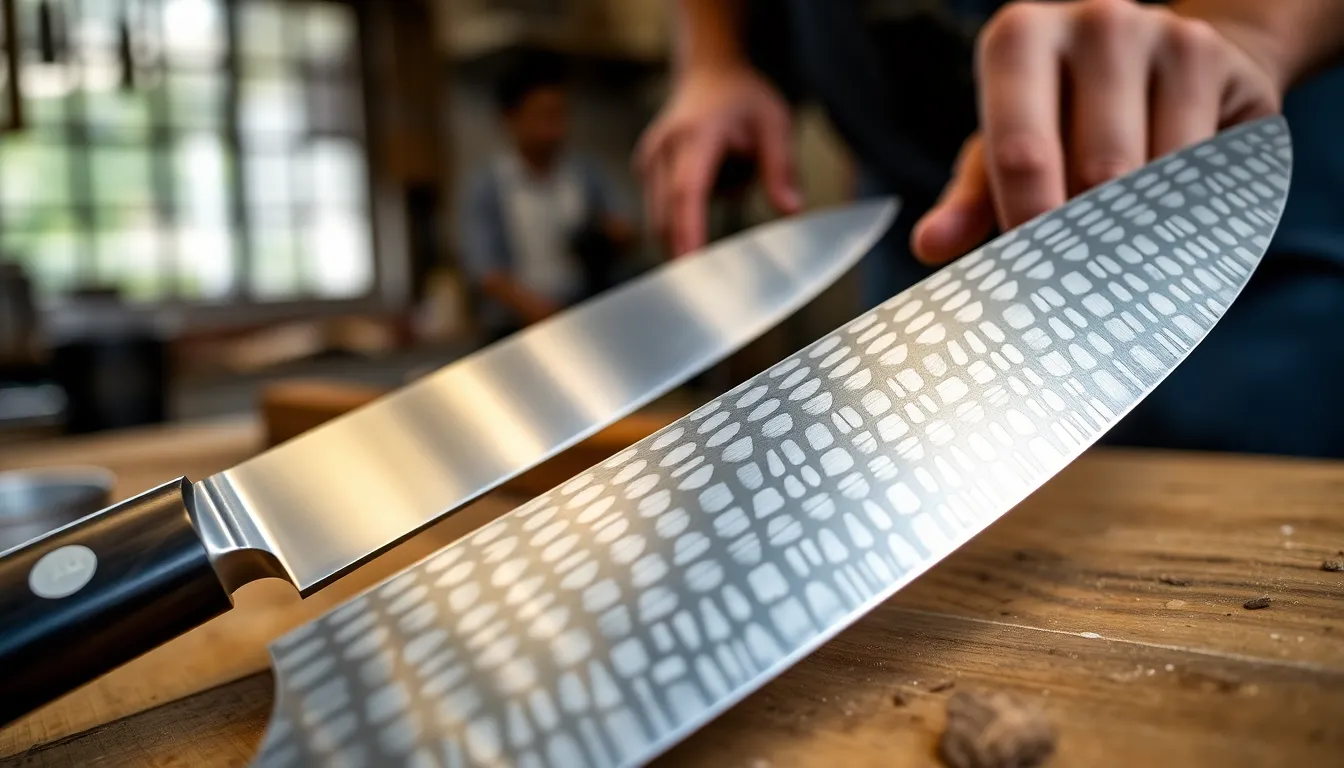
The Definitive 2025 Japanese Chef Knives Reviews: A Professional Evaluation of Performance and Craftsmanship
Navigating the world of high-end cutlery requires a deep understanding of metallurgy, ergonomics, and traditional craftsmanship. In this definitive guide to japanese chef knives reviews, we evaluate the top-tier blades that are defining the culinary landscape in 2025. Whether you are a professional executive chef or a dedicated home cook, selecting the right Japanese blade […]
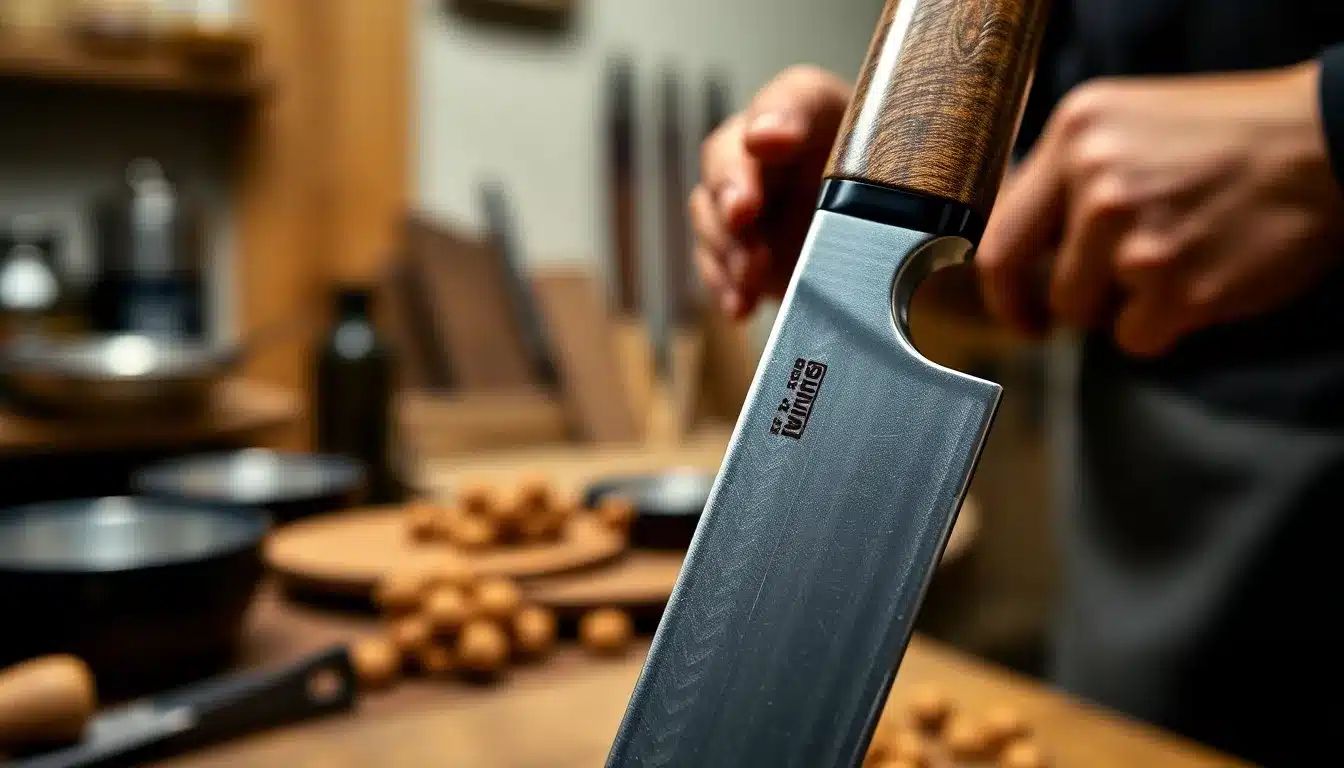
Zwilling Japanese Knives: The Ultimate Professional Evaluation for 2025
Welcome to the definitive guide for discerning chefs and culinary enthusiasts exploring the exceptional world of zwilling japanese knives. This comprehensive evaluation for 2025 delves into how these meticulously crafted tools, primarily under the esteemed Miyabi brand, fuse German engineering precision with ancient Japanese blade artistry. Discover why these premium knives are not just instruments, […]
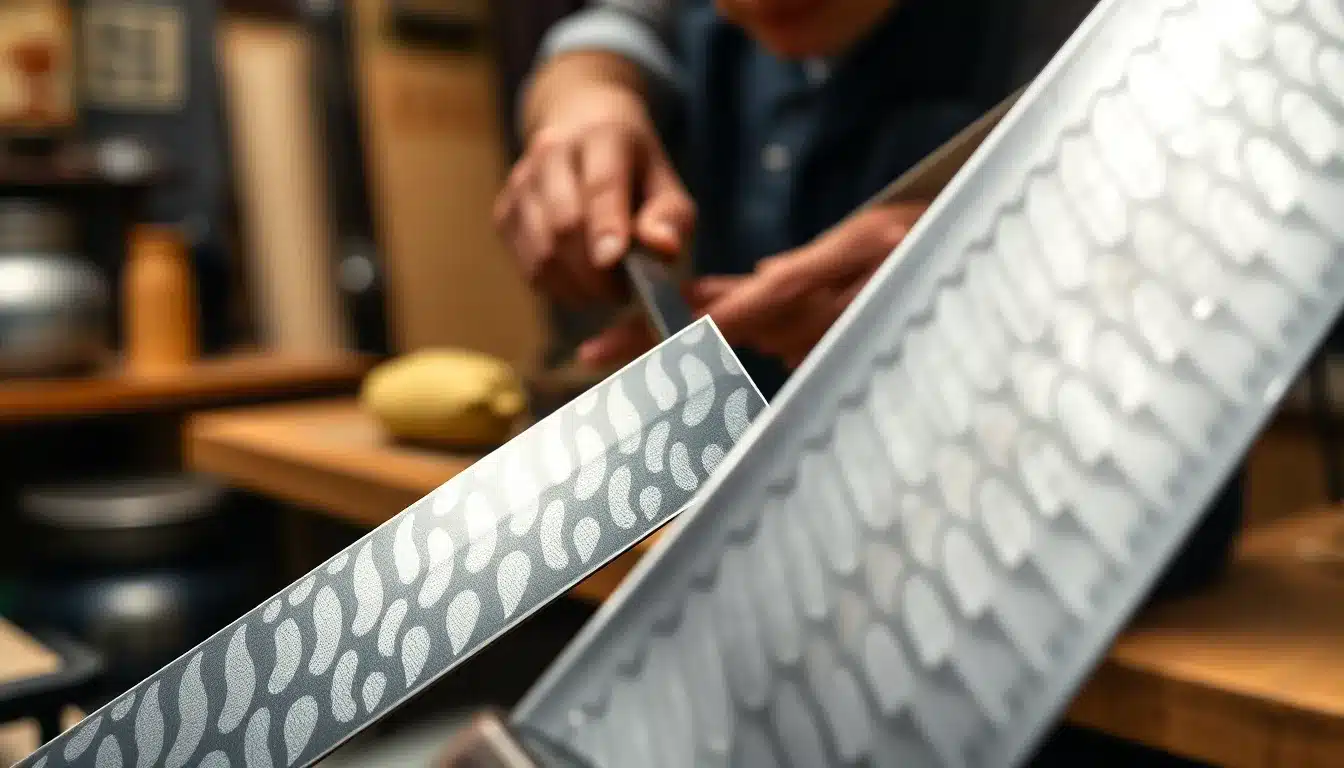
The Definitive Professional Evaluation: High-Quality Japanese Knives
Welcome to the definitive guide on selecting and understanding high-quality Japanese knives. For culinary professionals and discerning home cooks alike, the right blade can dramatically elevate precision, efficiency, and joy in the kitchen. These aren’t just tools; they are a blend of art, science, and centuries of tradition. Our exploration will unveil the intricate details […]