
Welcome to the intricate world of premium japanese utility knives, essential tools that redefine precision and efficiency in modern kitchens. These versatile blades, often known as petty knives, are not just small knives; they embody centuries of Japanese blacksmithing tradition fused with cutting-edge metallurgy. Understanding their unique characteristics can dramatically elevate your culinary experience, making everyday tasks like slicing, dicing, and intricate detail work effortless.
From their meticulously crafted edges to their perfectly balanced handles, japanese utility knives offer a level of control and sharpness rarely found in their Western counterparts. This definitive guide will take you through everything you need to know, from selecting the right steel to mastering advanced techniques, ensuring you make an informed choice for your culinary journey. Discover how these nimble blades can become your most trusted companion in the kitchen. 🎯
📋 Table of Contents
- 📌 Unlocking the Potential of Japanese Utility Knives
- 📌 Beyond the Basics: Understanding Japanese Utility Knives and Their Cousins
- 📌 The Anatomy of Excellence: Key Features of Premium Japanese Utility Knives
- 📌 Regional Masterpieces: Discovering the Artisan Heart of Japanese Utility Knives
- 📌 Mastering the Petty: Advanced Techniques for Your Japanese Utility Knife
- 📌 The Science of Sharp: Advanced Metallurgy and Edge Design in Japanese Utility Knives
- 📌 Frequently Asked Questions About Japanese Utility Knives
- 📌 Essential Tools and Resources for Japanese Utility Knife Enthusiasts
- 📌 Real-World Performance: Success Stories with Japanese Utility Knives
- 📌 Embracing the Precision of Japanese Utility Knives in Your Kitchen
Unlocking the Potential of Japanese Utility Knives
Japanese utility knives are a cornerstone in any serious kitchen, offering unparalleled precision and versatility for a wide array of tasks. Their exceptional design and superior materials set them apart, making them indispensable for both professional chefs and home cooks alike.
These knives are not merely smaller versions of chef’s knives; they are specifically engineered for delicate work, intricate cuts, and tasks that demand high levels of control. Their nimbleness allows for detailed preparation that larger knives simply cannot achieve with the same grace.
What Exactly Defines a Japanese Utility Knife?
A japanese utility knife is typically a small to medium-sized kitchen knife, characterized by its slender, pointed blade and often a double-beveled edge. While Western utility knives are common, the Japanese version, most famously the petty knife, stands out for its superior edge retention and cutting performance.
It bridges the gap between a paring knife and a chef’s knife, providing an ideal balance of size and functionality. The term “petty” itself is derived from the French “petite,” indicating its smaller stature, yet its capabilities are anything but small.
Why Every Modern Kitchen Needs a Versatile Japanese Petty Knife
Investing in a Japanese petty knife means equipping your kitchen with a highly versatile tool capable of handling numerous tasks efficiently. From mincing garlic and shallots to trimming meats and fruits, its sharp edge and agile form make it incredibly effective.
A high-quality petty knife enhances your cooking workflow, allowing for quicker and more precise preparation. It reduces effort and fatigue, transforming potentially tedious tasks into enjoyable culinary moments. For those looking to upgrade their arsenal, exploring authentic Japanese knives made in Japan is a great starting point.
Beyond the Basics: Understanding Japanese Utility Knives and Their Cousins
To truly appreciate the japanese utility knife, it helps to understand its place within the broader family of Japanese cutlery. While it shares some characteristics with other blades, its unique role is distinct and invaluable.
This section delves into what makes the petty knife special, how blade lengths influence its use, and the key differences from its Western counterparts. It’s about recognizing the nuances that contribute to superior performance.
The Petty Knife: Japan’s Answer to the All-Purpose Utility Blade
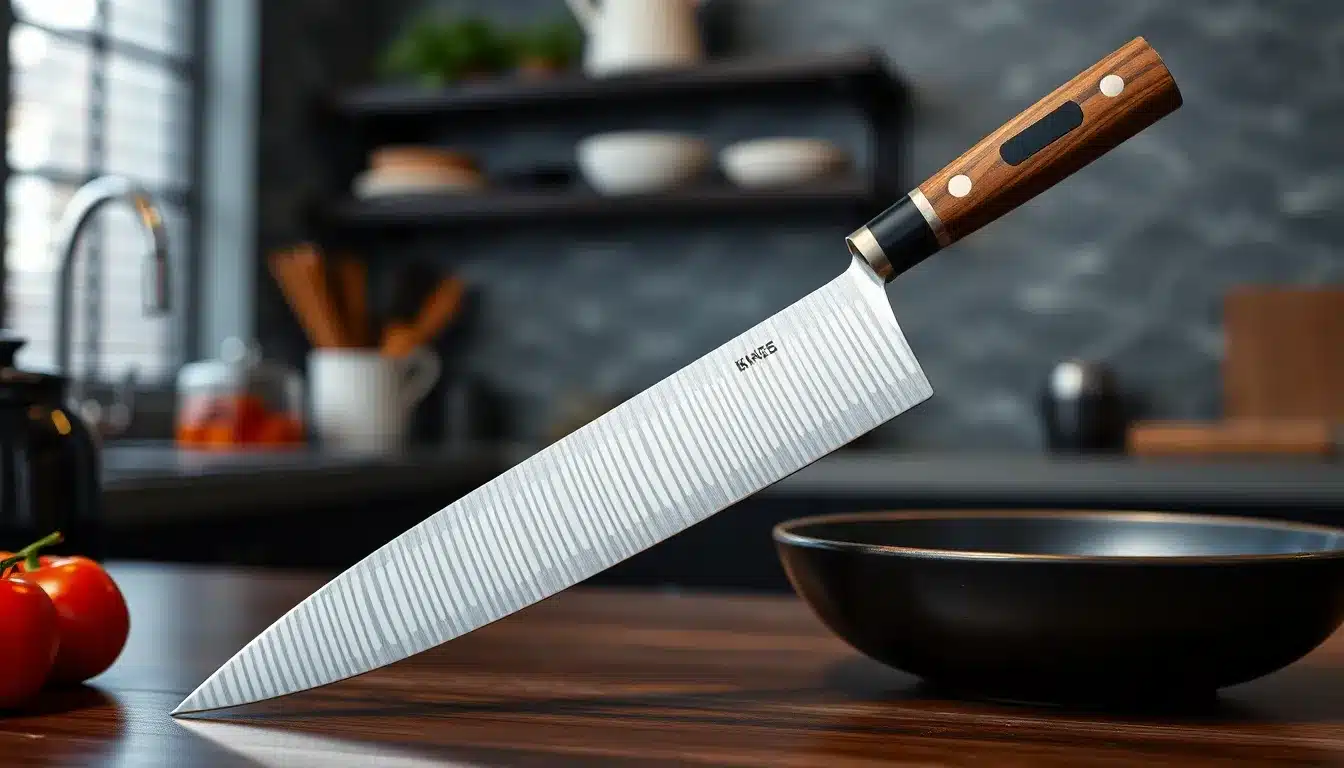
The petty knife is undeniably the most recognized form of a japanese utility knife. Its design allows it to excel at tasks that require both precision and a bit more reach than a paring knife can offer. Think of it as your go-to blade for almost everything short of heavy-duty chopping.
Professional chefs often reach for their petty knife for delicate garnishes, precise slicing of smaller vegetables, and even filleting small fish. Its balanced feel and razor-sharp edge are perfectly suited for these demands.
Decoding Blade Lengths: From Paring to Small Gyuto
Japanese utility knives come in a range of lengths, typically from 80mm to 150mm (approximately 3 to 6 inches). A shorter petty knife, around 80-100mm, functions much like a paring knife, ideal for in-hand work such as peeling and intricate carving.
As the length increases to 120mm or 150mm, the blade becomes more versatile for board work, approaching the capabilities of a small gyuto (Japanese chef’s knife). These longer versions are excellent for slicing shallots, trimming larger vegetables, and even portioning smaller cuts of meat with exceptional control.
Western Utility vs. Japanese Petty: A Clear Distinction
While both Western utility knives and Japanese petty knives serve a similar purpose, their craftsmanship and performance differ significantly. Western utility knives often prioritize durability and ease of sharpening over extreme sharpness and edge retention.
Japanese petty knives, by contrast, focus on achieving a thinner, harder blade with a finer edge, leading to superior cutting performance. This difference stems from traditional Japanese forging techniques and the use of specialized steels. For a comprehensive overview of high-quality options, consider our ultimate master’s guide to high-end Japanese knives.
The Anatomy of Excellence: Key Features of Premium Japanese Utility Knives
What elevates a good japanese utility knife to a truly premium tool? It’s a combination of superior materials, meticulous design, and expert craftsmanship. These elements work in harmony to deliver an unparalleled cutting experience.
From the choice of steel to the handle’s ergonomics and the blade’s geometry, every detail is crucial. Understanding these features empowers you to select a knife that truly meets your culinary aspirations.
Mastering the Edge: Exploring High-Performance Japanese Steel (VG-10, SG2, AUS-8)
The heart of any Japanese knife lies in its steel. Premium japanese utility knives often feature high-carbon stainless steels like VG-10, SG2 (R2), and AUS-8. VG-10 is renowned for its excellent balance of hardness, edge retention, and corrosion resistance, making it a popular choice for many mid-to-high-end knives.
SG2, or R2 powder steel, represents an even higher tier, offering exceptional hardness and superior edge retention, albeit requiring a bit more care. AUS-8 is a more budget-friendly option, still providing good sharpness and ease of sharpening. According to Takefu Special Steel, pioneers in VG-10, their steel’s fine grain structure is key to its legendary performance.
Handle with Care: Ergonomics, Materials, and Balance for Precision Tasks
A knife’s handle is just as vital as its blade for control and comfort. Japanese utility knives typically feature either traditional Wa-handles (octagonal, D-shaped, or oval) made from wood (like magnolia, rosewood, or ebony) or Western-style handles. Wa-handles are favored for their light weight and natural grip, promoting delicate movements.
The balance of the knife, often slightly blade-heavy, allows the knife to do much of the work, reducing strain during prolonged use. This thoughtful design ensures precision tasks are performed with maximum comfort and minimal effort. The overall feel in hand is a critical factor for any serious chef.
Blade Geometry and Grind: The Secret to Effortless Slicing
The blade geometry and grind are fundamental to a japanese utility knife’s legendary cutting ability. These knives typically feature a very thin blade behind the edge, minimizing friction as they pass through food. This thinness is often achieved through a combination of convex (hamaguri) or concave (hollow) grinds.
A shallow grind angle results in an incredibly sharp edge that slices effortlessly, preserving the integrity of delicate ingredients. This specific design allows for superior food release and reduced wedging, enhancing the overall cutting experience. Discover more about intricate blade designs in our guide on master crafted Damascus Japanese chef knives.
Regional Masterpieces: Discovering the Artisan Heart of Japanese Utility Knives
The craft of Japanese knifemaking is deeply rooted in specific regions, each boasting unique traditions, forging techniques, and signature styles. These regional distinctions add a rich layer of heritage and character to every japanese utility knife.
Understanding these origins helps appreciate the artistry and specialized skills passed down through generations. It’s a journey into the heart of Japan’s celebrated artisan culture.
From Sakai to Seki to Echizen: Distinctive Styles and Forging Traditions
Japan’s primary knifemaking centers each offer a distinct approach. Sakai, famous for its single-bevel knives, has a history steeped in professional kitchen knives for traditional Japanese cuisine. Their utility knives often reflect this heritage with meticulous hand-finishing.
Seki City, often called “the City of Blades,” embraces both traditional and modern manufacturing, producing a vast range of high-quality knives for global markets. Echizen, known for its long history of forging, specializes in robust and beautifully crafted blades, including unique petty knife designs. These regional variations offer a diverse palette for knife enthusiasts.
Leading Brands and Hidden Gems: A Curated Selection for Discerning Chefs
When seeking a premium japanese utility knife, several brands consistently stand out for their quality and innovation. Brands like Shun, Tojiro, Miyabi, and Yoshihiro are widely recognized for their exceptional craftsmanship and performance. Shun Cutlery, for instance, blends traditional Japanese artisan techniques with modern technology to create highly durable and aesthetically pleasing knives.
Beyond these established names, smaller workshops and artisan smiths represent hidden gems, often producing limited quantities of exquisitely hand-forged knives. These custom pieces can offer unparalleled uniqueness and a deeper connection to the craft. For more insights into bespoke options, explore Japanese custom knives expert insights.
The Art of Hand-Forging: Honyaki vs. Kasumi for Smaller Blades
The forging method significantly impacts a knife’s performance and character, even for smaller utility blades. Honyaki knives, made from a single piece of high-carbon steel, represent the pinnacle of Japanese knifemaking. They offer exceptional edge retention and sharpness but require significant skill to forge and maintain.
Kasumi knives, a more common and robust choice, consist of a core of hard carbon steel clad with softer iron. This construction makes them more forgiving, easier to sharpen, and less prone to chipping, making them excellent for everyday use as a japanese utility knife. Both methods result in beautiful and functional tools, each with its own advantages.
Mastering the Petty: Advanced Techniques for Your Japanese Utility Knife
Owning a high-quality japanese utility knife is only the first step; truly mastering its use unlocks its full potential. Advanced techniques leverage the knife’s inherent design for maximum efficiency, precision, and safety in the kitchen.
These skills not only improve your cooking but also deepen your appreciation for the blade’s capabilities. Practice and patience are key to becoming adept with these nimble tools.
Precision Tasks: Slicing, Dicing, and Detail Work with Nimble Blades
The petty knife excels at a range of precision tasks. Its slender profile and acute edge are perfect for finely mincing herbs like parsley and chives, or creating perfectly even slices of mushrooms and garlic. Dicing small fruits and vegetables becomes a breeze, yielding consistent results every time.
For more intricate detail work, such as deseeding chilies or segmenting citrus, the petty knife’s sharp point and excellent control are indispensable. According to the Culinary Institute of America, mastering a smaller, agile knife like the petty is fundamental for developing superior knife skills.
Beyond the Board: In-Hand Control and Ergonomic Grips for Delicate Cuts
While many tasks are performed on a cutting board, the japanese utility knife truly shines with in-hand control for delicate cuts. Peeling apples, potatoes, or ginger becomes more efficient and controlled when the knife is held properly in hand, allowing for intricate shaping and trimming.
Ergonomic grips, such as the pinch grip where the thumb and index finger grip the blade near the bolster, provide optimal stability and maneuverability. This grip allows for precise, almost artistic control over the blade, essential for garnishes and filleting small items.
Care and Maintenance: Preserving Your Blade’s Legendary Sharpness
To ensure your japanese utility knife retains its legendary sharpness and longevity, proper care and maintenance are paramount. Always hand wash your knife immediately after use with warm, soapy water and dry it thoroughly to prevent corrosion, especially with high-carbon steels.
Regular honing with a ceramic or fine steel honing rod will maintain the edge between sharpenings. When the blade eventually dulls, sharpening on Japanese whetstones is recommended to restore its razor-sharp edge. Never put a quality Japanese knife in the dishwasher, as this can damage the blade and handle.
The Science of Sharp: Advanced Metallurgy and Edge Design in Japanese Utility Knives
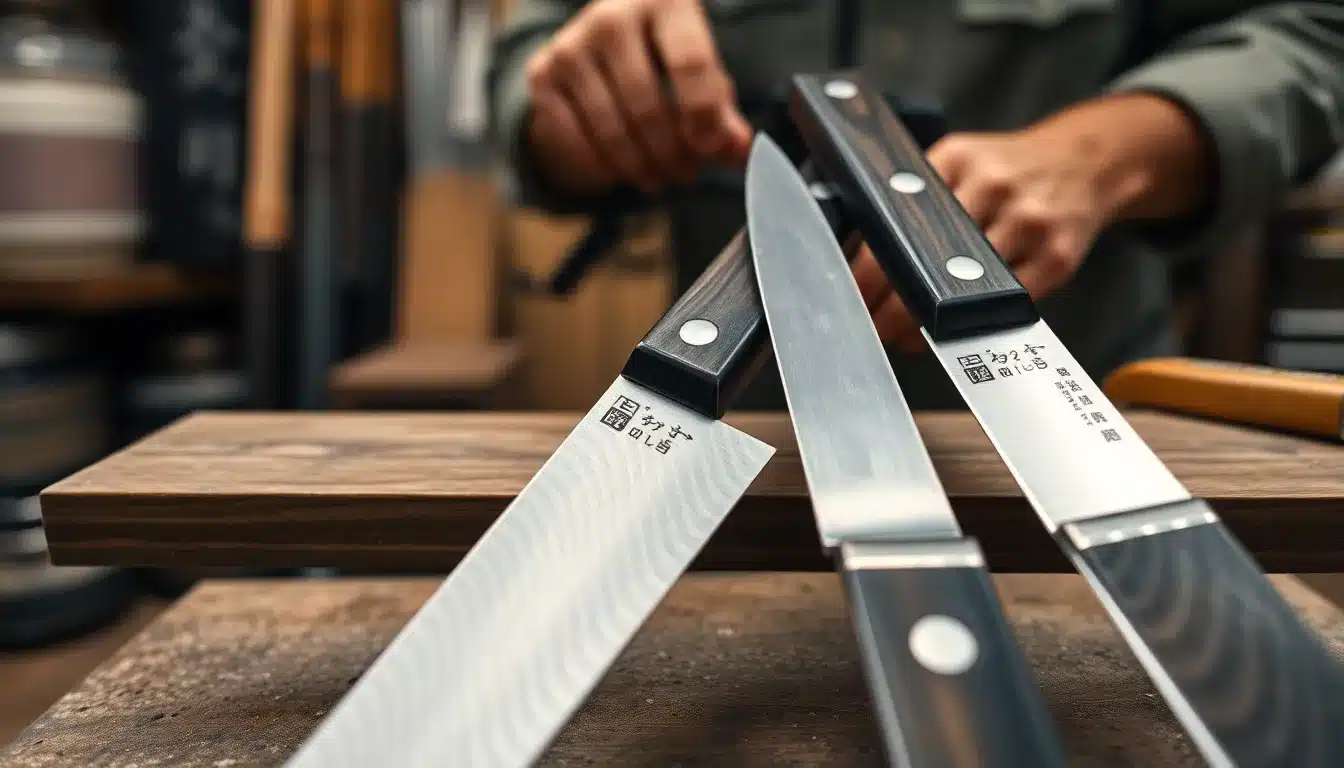
The exceptional sharpness and edge retention of a japanese utility knife are not mere happenstance; they are the result of advanced metallurgical science and ingenious edge design. This section explores the scientific principles that underpin these superior qualities.
Delving into the composition of steel and the intricacies of blade geometry reveals why these knives perform at such an elite level. It’s a testament to centuries of innovation and precision.
Unpacking Steel Composition: Carbon, Chromium, and Vanadium’s Role in Performance
The performance of Japanese knife steel is a direct function of its alloy composition. Carbon content is crucial for hardness and edge retention; higher carbon generally means a harder, sharper edge. Chromium provides corrosion resistance, balancing the high carbon’s tendency to rust. Steels like VG-10 boast around 1% carbon and 15% chromium.
Vanadium is added to create fine carbides, which significantly improve wear resistance and allows for a very fine grain structure, contributing to an incredibly sharp and durable edge. Molybdenum and Cobalt also play roles in enhancing toughness and strength. This precise balance of elements creates a material perfect for cutting.
Micro-Bevels and Grind Angles: Optimizing Edge Retention and Cutting Feel
Japanese knives often feature extremely acute grind angles, typically between 10-15 degrees per side, compared to Western knives’ 20-25 degrees. This steeper angle results in a thinner, sharper edge. Beyond the primary grind, many blades incorporate micro-bevels.
A micro-bevel is a secondary, very small bevel at the very apex of the edge. It adds a slight amount of strength and durability to an otherwise extremely thin and delicate edge, helping to prevent chipping while maintaining superior sharpness. This optimization balances aggressive cutting with practical robustness.
Cryogenic Treatment and Heat Hardening: Beyond the Rockwell Scale for Ultimate Durability
The heat treatment process is critical in unlocking the full potential of high-performance steel. Japanese knifemakers employ precise heat hardening techniques, often involving multiple tempering cycles, to achieve optimal hardness (typically 60-65 HRC on the Rockwell scale) and toughness.
Some premium knives also undergo cryogenic treatment, where blades are cooled to extremely low temperatures after quenching. This process converts retained austenite into more stable martensite, enhancing hardness, wear resistance, and the overall stability of the blade structure. It’s a critical step for ultimate edge durability.
Frequently Asked Questions About Japanese Utility Knives
Potential buyers often have specific questions before investing in a japanese utility knife. This section addresses common queries, providing concise and informative answers to help clarify any doubts.
Understanding these aspects ensures you make the best decision for your culinary needs. We aim to equip you with all the knowledge required for confident ownership.
What is the primary use for a Japanese utility knife?
The primary use for a japanese utility knife is versatile precision work. It excels at tasks requiring delicate control such as slicing small vegetables and fruits, mincing garlic and herbs, trimming meats, and filleting small fish. It’s an ideal tool for any task that a paring knife might be too small for, and a chef’s knife too large.
How does a petty knife differ from a standard utility or paring knife?
A petty knife differs primarily in its superior edge geometry, harder steel, and often more acute grind angle. This results in a much sharper, thinner blade with better edge retention compared to standard Western utility or paring knives. While functionally similar in size, the performance difference in cutting is remarkable due to its meticulous craftsmanship.
What are the benefits of choosing a Japanese utility knife over a Western one?
Choosing a Japanese utility knife offers several benefits, including exceptional sharpness, superior edge retention, and enhanced precision due to thinner blades. These knives often provide better food release and less drag, making cutting tasks feel effortless. Their ergonomic handles and overall balance also contribute to a more comfortable and efficient cutting experience.
What’s a reasonable budget for a high-quality Japanese petty knife?
A reasonable budget for a high-quality japanese utility knife typically ranges from $100 to $300, depending on the steel type, handle material, and brand. Entry-level options might start around $70-$90, while artisan-made or exotic steel knives can easily exceed $300. The investment is worthwhile for the performance and longevity provided. If you’re looking for value, check out Japanese kitchen knives for sale.
How should I properly care for and sharpen my Japanese utility knife?
Proper care for your japanese utility knife involves hand washing immediately after use and thoroughly drying it to prevent rust. Avoid dishwashers. For sharpening, use high-quality Japanese whetstones to maintain the acute edge. Regular honing with a ceramic rod will keep the edge aligned between full sharpenings, preserving its legendary sharpness for years.
Essential Tools and Resources for Japanese Utility Knife Enthusiasts
To truly embrace the world of Japanese cutlery, enthusiasts require more than just the knife itself. A selection of essential tools and reliable resources can significantly enhance the ownership and maintenance experience of your japanese utility knife.
These resources help ensure your blades remain in pristine condition and your knowledge of the craft continues to grow. Investing in quality accessories is just as important as investing in the knife itself. 🔥
Recommended Sharpening Stones, Honing Rods, and Stropping Pastes
For maintaining the keen edge of your japanese utility knife, a set of sharpening stones is indispensable. Start with a medium-grit stone (1000-2000 grit) for general sharpening, followed by a fine-grit stone (4000-6000 grit) for refining the edge. A ceramic honing rod is excellent for daily edge realignment, much gentler than steel rods.
For the ultimate razor-sharp finish, stropping pastes used on a leather strop can polish the edge to an extraordinary level, removing any microscopic burrs. Brands like Naniwa, Shapton, and King are highly recommended for their quality and performance.
Further Learning: Books, Forums, and Expert Communities on Japanese Cutlery
The journey of learning about Japanese cutlery is endless and rewarding. Numerous resources are available for further education. Books like “The Art of Japanese Knives” by Eijiro Konno offer deep dives into history and craftsmanship. Online forums and communities, such as those found on Serious Eats or specialized knife enthusiast websites, provide platforms for asking questions, sharing experiences, and discovering new techniques.
Joining expert communities connects you with seasoned collectors and professional chefs who can offer invaluable advice and recommendations. This continuous learning fosters a deeper appreciation for your tools and the culinary arts.
Real-World Performance: Success Stories with Japanese Utility Knives
The true measure of any kitchen tool lies in its real-world performance. Japanese utility knives have garnered widespread acclaim for their ability to transform culinary tasks, earning the loyalty of both professional chefs and home cooks. Their success stories underscore their unparalleled value.
These testimonials highlight the precision, versatility, and enduring quality that defines these exceptional blades. It’s about how they empower individuals in their kitchens, day after day. ✅
Chef’s Testimonials: Precision in Professional Kitchens from Top Culinary Experts
In the fast-paced environment of professional kitchens, every second and every cut counts. Top culinary experts consistently praise their japanese utility knives for their precision and reliability. Chef Nobu Matsuhisa, known for his intricate Japanese-Peruvian cuisine, relies on the sharpness and control of Japanese blades for his delicate preparations.
Many Michelin-starred chefs report that a petty knife is indispensable for detailed plating, fine slicing of proteins, and creating complex garnishes that define haute cuisine. Its agility allows for meticulous work under pressure, making it a professional standard.
Home Cook Transformations: Elevating Everyday Meal Prep with Unmatched Versatility
Beyond professional settings, home cooks experience significant transformations in their everyday meal preparation with a high-quality japanese utility knife. Tasks that once felt cumbersome, like mincing a pile of garlic or preparing a fruit salad, become surprisingly quick and enjoyable. The effortless slicing reduces prep time and fatigue.
Home cooks often report a newfound confidence and creativity in the kitchen, inspired by the precision these knives offer. The ability to make cleaner, more consistent cuts improves both the aesthetics and texture of dishes. It truly elevates the home cooking experience.
Durability and Longevity: A Legacy of Craftsmanship That Stands the Test of Time
The investment in a premium japanese utility knife is not just for immediate performance but also for enduring quality. With proper care, these knives are designed to last a lifetime, often becoming cherished heirlooms passed down through generations. This longevity is a testament to the superior materials and meticulous craftsmanship involved.
The combination of hardened steels, robust handle construction, and expert heat treatment ensures that these blades withstand the rigors of daily use without compromising their cutting ability. It’s a legacy of functional art that continues to perform for decades. 💡
Embracing the Precision of Japanese Utility Knives in Your Kitchen
The journey into the world of japanese utility knives reveals more than just a tool; it uncovers a philosophy of precision, craftsmanship, and culinary excellence. These versatile blades are designed to enhance every aspect of your kitchen experience, making you a more efficient and confident cook.
Embracing a petty knife means welcoming a legacy of sharp innovation and artistry into your daily routine. It’s an investment in both your culinary skills and the joy of cooking.
Key Takeaways for Your Culinary Journey and Knife Selection
Throughout this guide, we’ve highlighted the critical aspects that define premium japanese utility knives. Remember that superior steel, meticulous blade geometry, and ergonomic handles are paramount. Understanding regional forging traditions and the distinction from Western knives will guide your choices.
For more detailed information on selecting high-quality kitchen tools, consider exploring our extensive guide on Japanese kitchen knives for sale. These takeaways empower you to make an informed decision, ensuring you choose a knife that perfectly matches your culinary aspirations.
Your Next Cut: Choosing and Caring for Your Ideal Petty Knife for Years to Come
As you consider adding a japanese utility knife to your collection, prioritize reputable brands and the specific steel types discussed. Don’t forget the importance of handle comfort and overall balance. Once acquired, commit to the simple yet crucial care and maintenance routines to preserve its legendary sharpness.
This commitment ensures your petty knife remains a reliable, high-performing companion in your kitchen for many years. It’s a tool that will continually inspire precision and elevate your cooking to new heights. Happy cutting! 🔪
🔪 Discover Premium Japanese Knives at JapaneseKnivesWorld
At JapaneseKnivesWorld, we are passionate about authentic Japanese cutlery, helping chefs and cooking enthusiasts discover the finest knives from Japan’s master craftsmen.
⚔️ Curated selection of premium Japanese knives from legendary makers
🗾 Expert guides on Japanese steel types and craftsmanship techniques
📚 Comprehensive reviews and comparisons of top knife brands
🎯 Professional advice for choosing your perfect Japanese knife
Ready to find your perfect Japanese knife?
🔗 Explore our complete buying guides and expert recommendations at JapaneseKnivesWorld.com
Follow us for daily knife insights:
🌐 Website